

With the onset of menopause, women face a series of profound changes in their bodies, affecting not only their physical appearance but also their emotional and psychological well-being. Among the various side effects of menopause, one of the most common yet least discussed is the increase in facial hair. This phenomenon manifests as the appearance of isolated, longer, and thicker hairs compared to others, typically in specific areas of the face, such as the chin, cheeks, and upper lip. While it may seem like a minor side effect, the increase in facial hair during menopause can be bothersome and, for many women, significantly impact their self-esteem.
Causes of Facial Hair During Menopause: Why Does It Happen?
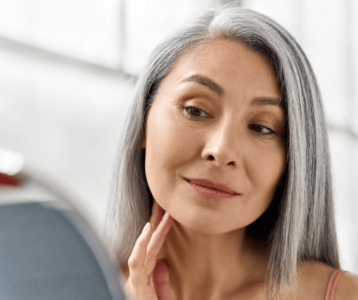 As women age and approach menopause, many of them notice significant changes in the growth of body hair.
Generally, while hair on the legs, groin, and arms tend to decrease, unsightly facial hair may appear, especially in areas like the chin, cheeks, and upper lip. This phenomenon can be destabilizing, particularly when the change occurs suddenly and becomes noticeable. However, it is essential to understand the underlying causes to address it in the most appropriate way.
Increase in Facial Hair During Menopause: The Role of Hormonal Changes
The primary cause of increased facial hair during menopause is related to the hormonal changes that occur during this stage of life. With menopause, there is a drastic reduction in estrogen levels, the quintessential female hormones, and an increase in androgen production, typically male hormones. The reduction in estrogen leads to an increase in dihydrotestosterone (DHT), a derivative of testosterone that plays a crucial role in hair growth. DHT acts on the hair follicles, stimulating the production of thicker and darker hair in areas typically associated with male patterns, such as the chin, jawline, and upper lip. These hormonal changes begin to manifest during perimenopause, when hormonal fluctuations start to accelerate, and continue to intensify with the onset of actual menopause.
Conditions and Hormonal Dysfunctions as Causes of Facial Hair During Menopause
In addition to natural hormonal changes, some pathological conditions can contribute to the increase of facial hair during menopause. These include:
- Adrenal gland dysfunction, leading to overproduction of hormones such as cortisol and androgens.
- Cushing’s syndrome, characterized by excessive production of adrenocorticotropic hormone (ACTH), which increases cortisol production.
- Polycystic ovary syndrome (PCOS), a condition where the ovaries produce excessive levels of androgens.
Medications and Increased Facial Hair During Menopause
Another contributing factor to increased facial hair during menopause is the use of medications. For instance, the topical application of corticosteroids on the face to treat dermatological issues can result in a temporary increase in hair growth.
Remedies for Facial Hair During Menopause: Effective Solutions
When it comes to solutions for treating facial hair during menopause, it’s important to be cautious in choosing the method, as not all options are suitable. It’s better to avoid waxing or shaving because the skin on the face is particularly delicate and can easily become irritated. Waxing can cause redness, inflammation, and, with frequent use, can damage the skin, reducing its elasticity. Additionally, shaving cuts the hair at the base, causing it to grow back faster and thicker, and can lead to cuts or ingrown hairs. For safer and more lasting removal, professional treatments like laser or electrocoagulation are recommended.
Treatments for Facial Hair During Menopause: Laser and Electrocoagulation
Laser treatment is an effective method for permanent hair removal, but it only works if the hair is dark, as it relies on the absorption of light by the melanin in the hair follicle. When the hair is light or white, a more suitable solution might be electrocoagulation (also known as needle epilation), which tends to be more effective than laser. This treatment involves inserting a needle into the hair follicle, which is then exposed to a high-frequency alternating current that destroys the follicle, preventing hair regrowth.
The Importance of Psychological Well-being in Managing Facial Hair During Menopause
When an issue like the increase in facial hair during menopause affects psychological well-being, it’s essential not to ignore it and to seek the most appropriate solution. An experienced professional will be able to listen attentively, understand your needs, and recommend the best treatment, addressing the situation with clarity and honesty.
Dr. Vanessa De Leonardis
Nutritionist Biologist at Selenia Italia