


What is the microbiota?
The microbiota is the set of microbes (bacteria, viruses, fungi) that live in the human body and reaches a number equal to 100 trillion elements, that is, a number 10 times higher than that of human cells. The microbiota is distributed in many tissues and organs, from the skin to the oral cavity, from the genital organs to the airways, although its most numerous colonies are located in the intestine and colon. For this reason, the most widely colonized system is the digestive tract: it is estimated that the colon alone contains more than 70% of the microbes present in the body.
On the other hand, the internal surface of the human intestine is considered larger than that of a tennis court and, precisely because of its size, it represents an ideal environment for bacterial colonization, also because it contains all types of substrate useful for the growth of microorganisms. The quantitative and qualitative alterations of the microbiota, known as dysbiosis, are often caused by an incorrect diet, by the use of drugs or by exposure to external chemical or physical factors that can lead to the development or maintenance of many chronicdiseases.
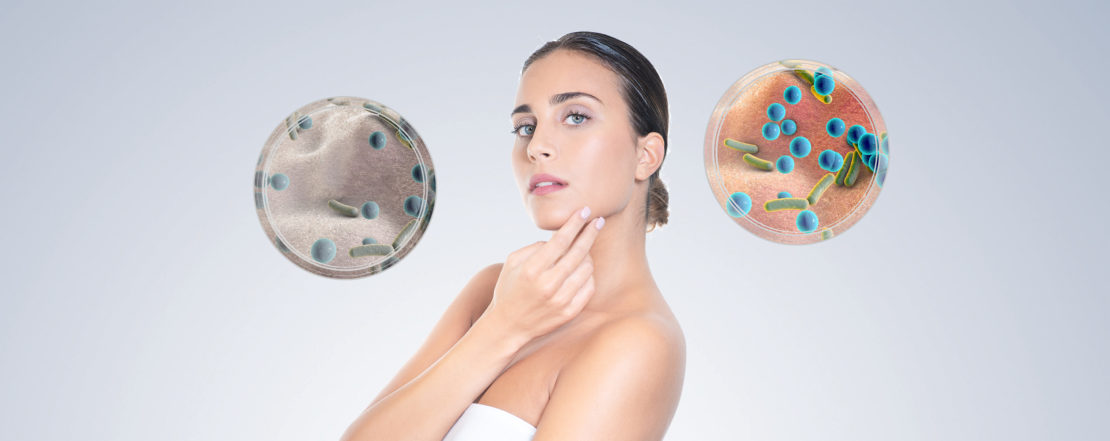
The skin microbiota, the health and beauty of the skin
In popular opinion, the idea has always spread that bacteria represent a danger to humans, especially on the skin. But the scientific evidence has overturned this way of thinking, showing that the microorganisms present on the skin can be healthy for the skin with which they live in symbiosis, since they fight pathogens. Many studies, for example, have highlighted how the alterations and destruction of microorganisms that live on our skin can be associated with the worsening of skin diseases, including atopic dermatitis, skin acne, psoriasis and rosacea.
After the intestine, the skin is the organ most populated by microorganisms such as bacteria, viruses and fungi. 50% of the bacteria present on the skin belong to Actinobacteria, 25% to Firmicutes, 16% to Proteobacteriae and approximately 8-10% to Bacteroides; they are distributed over the entire skin surface, even if, depending on the district, we can find different microorganisms. The factors that influence the different distribution of bacteria are relative humidity and the abundance of sebum: in fact, dry areas, wet areas and sebaceous areas are inhabited by different germs.
Most skin bacteria are diners (they benefit from us): they consume nutrients present on the skin and produce substances that prevent pathogens from adhering to the skin, also keeping the skin immune system always efficient.
After birth, the main factors that can affect the growth and development of bacteria on the skin are:
• The skin pH;
• The humidity;
• The temperature;
• The relationship between oxygen and carbon dioxide;
• The exposure to the sun (ultraviolet rays also damage bacterial DNA);
• The interaction with other bacteria;
• The person’s immune defenses;
• The personal hygiene.
Starting from these evidences, scientific research has begun to focus attention on the study of new cosmetics containing bacteria useful for fighting skin disorders due to pathogenic organisms. At the same time, for dermocosmetics the way has opened for a new approach towards “skincare” products based on “good bacteria”, such as probiotics and substances that promote their growth, or rather prebiotics.
Nowadays the role of the skin microbiota is increasingly placed at the center of attention, considering its function against external aggressions essential for optimizing skin health, to ensure its natural beauty and to slow down aging in the long term. Probiotics can play a vital role in daily skin care and are gaining increasing space as ingredients in creams, serums and cleansers. The novelty consists in the discovery that, if applied locally, these organisms are able to positively influence the composition and balance of the skin microbiota.
A balanced bacterial flora guarantees, in turn, the good health of the skin, which is thus able to regenerate itself more easily, aging more slowly..